
A guided way to set up what you pay, instead of facing a table of three hundred cards. It asks questions, shows you the sums, and writes nothing until the last step.
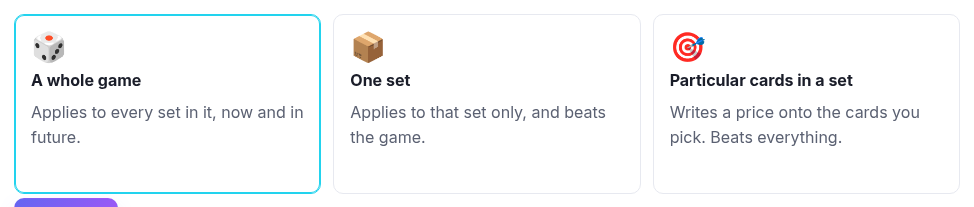
Three modes, and they do different things
| Mode | What it writes | Use it when |
|---|---|---|
| A whole game | A rule for the game | Starting from nothing, or changing your mind about a whole game. |
| One set | A rule for the set | One release is worth more, or less, than the rest of the game. |
| Particular cards | A price on each card | You want to be exact about the cards in one set. |
The difference matters. A rule keeps working for cards that do not exist yet — "never buy commons" covers the commons in next year's set. A price on a card only covers that card, but beats every rule.
Where you are, and when it saves

The step bar names every question ahead of you and ends with Review & save. That is the only step that writes anything — walk the whole thing and change your mind, and your shop is exactly as you left it.
Rarity and type
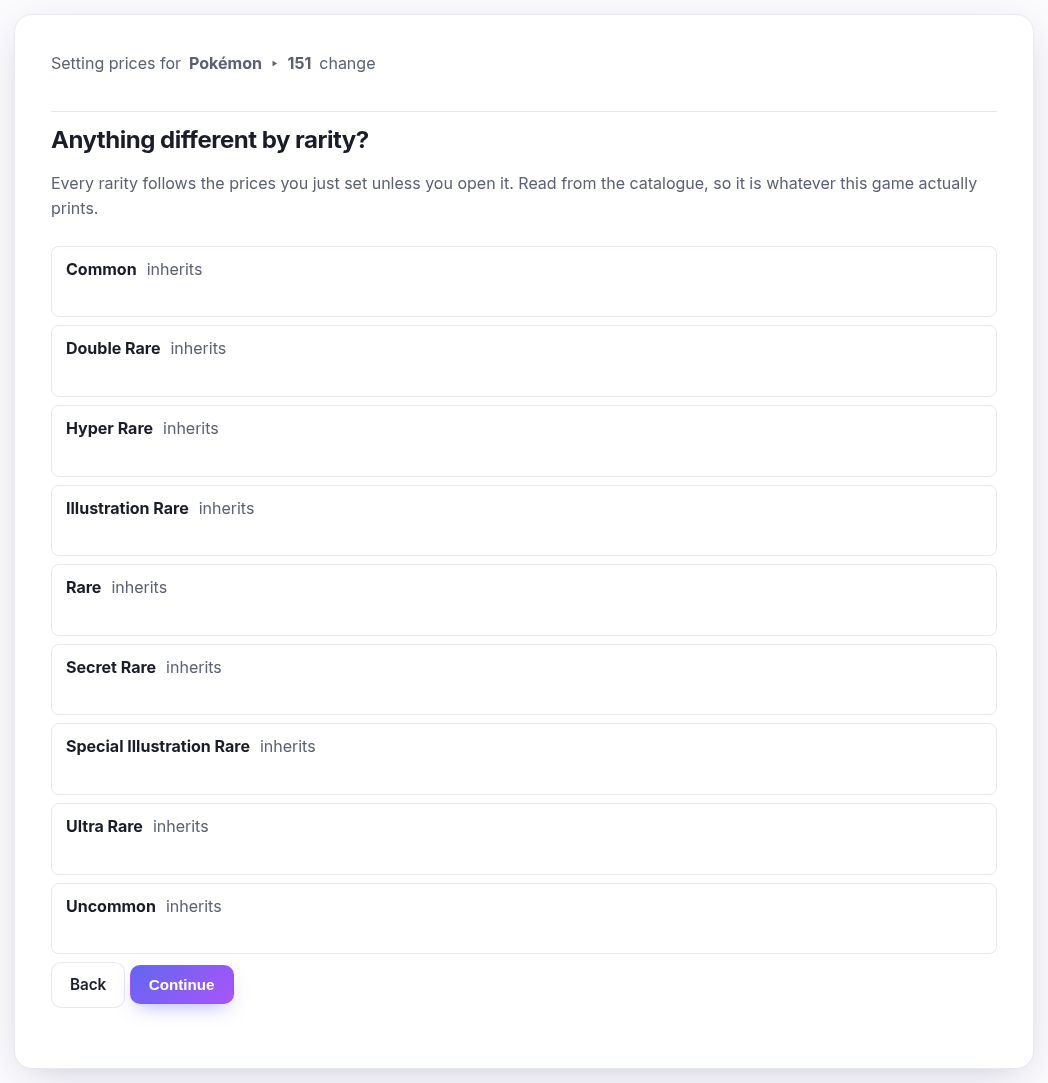
Every rarity starts as inherits — it follows the conditions you just set. Open only the ones you price differently, or tick Never buy to refuse a rarity outright. The list is whatever the game actually prints, so it is five rarities for Magic and thirty-nine for Pokémon, and a game with no card types is never asked about them.
Picking cards
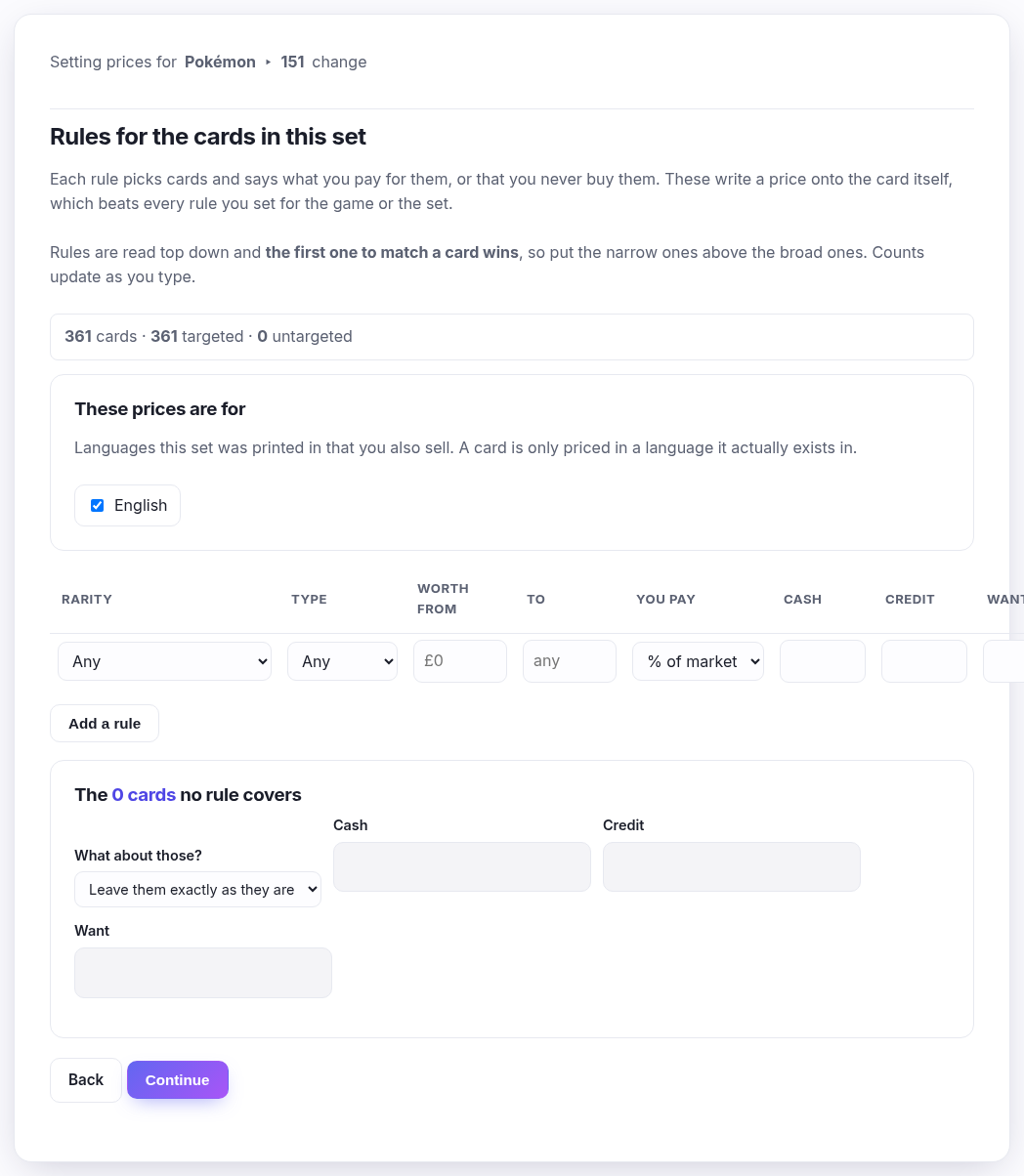
Rules here pick cards by rarity, by type, and by what they are worth — so "rares over £20 at 50%" is one line. Counts update as you type, and the number beside a rule is a link to the cards behind it.
The first rule to match a card wins, so put narrow rules above broad ones. Tick the languages the prices are for; a card is only priced in a language it was actually printed in. Whatever no rule covered is asked about at the end, never assumed.
Undoing it
Prices written onto cards are listed on Buy policy, grouped by set, with a Remove that forgets the whole run at once. Rules for a game or a set are listed there too.